Operational Qualification (OQ) verifies that equipment or a process operates reliably within its defined operating window, and that worst-case runs meet predefined acceptance criteria. Success looks like a closed protocol: every test script executed, every acceptance criterion satisfied or formally dispositioned, and every deviation closed with documented justification or resolved through CAPA. If any of those pieces are missing, the OQ package will not survive an audit, no matter how clean the raw data looks.
Before you run a single test, confirm two things.
- Installation Qualification (IQ) is complete and signed off — installation, configuration, and calibration records exist and are approved.
- Test methods used to collect OQ data are validated, not just "working." An unvalidated measurement method invalidates everything measured with it.
Pro Tip: Treat the OQ protocol as a legal document before you treat it as a technical one. Auditors read acceptance criteria first, test data second.
Key Takeaways
OQ succeeds only when validated test methods, worst-case parameter testing, and a live traceability matrix all converge into one defensible, audit-ready package.
| Point | Details |
|---|---|
| Confirm prerequisites first | IQ must be signed off and test methods validated before any OQ data is collected. |
| Test the edges, not just the middle | Worst-case parameter combinations, not nominal settings, prove real process robustness. |
| Build the traceability matrix early | Link every URS/FS requirement to its OQ test case, and keep it current as protocols change. |
| Document deviations in real time | Impact analysis on failures, not just retest results, is what auditors look for first. |
| Automation closes common gaps | Platforms like Qualitum enforce ALCOA+ checks and auto-update traceability, cutting authoring time by over 70%. |
Table of Contents
- What Is Operational Qualification OQ, and Where Does It Fit in IQ/OQ/PQ?
- What Has to Be Finished Before You Start OQ?
- What Documents Make Up a Defensible OQ Package?
- How Do You Define the Operating Window and Pick Worst-Case Tests?
- How Should You Execute OQ Tests and Record Results?
- How Do You Analyze OQ Results and Handle Deviations?
- What Best Practices Reduce OQ Audit Risk?
- How Do Automated Validation Platforms Strengthen OQ Evidence?
- A Practitioner's Checklist for OQ Day
- Get Audit-Ready OQ Evidence Without the Manual Authoring Burden
- Sources
- FAQ
What Is Operational Qualification OQ, and Where Does It Fit in IQ/OQ/PQ?
Operational qualification (OQ) sits in the middle of a three-stage qualification sequence, and the order is not negotiable. Installation qualification (IQ) confirms equipment is installed and configured correctly, utilities are connected, and instrumentation is calibrated. OQ then confirms the equipment or process performs as intended across its full operating range, including the edges. Performance qualification (PQ) comes last and confirms the qualified process consistently produces conforming product under actual production conditions, typically using real or representative materials.
The difference between OQ and PQ is scope, not sequence.: OQ tests the machine or system in isolation against its specified operating parameters, while PQ tests the process in context, often across multiple batches or lots, to prove real-world consistency. Confusing the two is one of the most common validation mistakes teams make. An OQ that quietly slides into PQ territory, running full production batches to "see what happens," produces evidence that satisfies neither stage cleanly.
OQ is required whenever a system is newly installed, significantly modified, relocated, or due for periodic requalification under a site's quality risk assessment. The FDA's process validation guidance frames this as a lifecycle expectation rather than a one-time event, and ISO 13485 and PIC/S Annex 15 echo the same principle: qualification evidence has to reflect the equipment's current state, not its state at commissioning three years ago.
Not all OQ looks the same. Three flavors show up most often in regulated environments:
- Equipment OQ — verifies a single piece of equipment (an autoclave, a filling line, an HPLC) operates within specification across its parameter range.
- Process OQ — verifies a multi-step process, often spanning several pieces of equipment, holds its critical parameters within limits.
- Computerized system OQ — verifies software functions, security controls, and data integrity features (audit trails, access controls, electronic signatures) behave as specified under 21 CFR Part 11 and EudraLex Annex 11 expectations.
What Has to Be Finished Before You Start OQ?
OQ evidence collected on top of a shaky foundation is not defensible evidence. It's a liability with a signature on it.
IQ must have demonstrated, with documented records, that the equipment is installed per manufacturer specification, utilities are connected and functioning, and all instrumentation used for qualification is calibrated and traceable to a recognized standard. If IQ skipped calibration verification, OQ data collected on that instrument is suspect from the start.
Test method validation has to be finished before OQ begins, not run in parallel with it. This sequencing matters because OQ testing relies on validated test methods and properly calibrated equipment to produce results that are accurate and reproducible enough to hold up under scrutiny. Skipping this step is a frequent root cause of FDA observations, because reviewers can't tell whether a failed run reflects the equipment or the measurement.
Before execution day, confirm the following:
- IQ protocol is fully executed, reviewed, and approved, with no open deviations.
- Calibration certificates for all test instrumentation are current and on file.
- Test methods used in OQ scripts have completed method validation (accuracy, precision, specificity, as applicable).
- Personnel executing and witnessing tests are trained on the specific protocol, not just generally trained on the equipment.
- Relevant SOPs (deviation handling, data recording, equipment operation) are current and referenced in the protocol.
Pro Tip: Keep a one-page prerequisite sign-off sheet attached to the front of the OQ protocol. It gives auditors an immediate answer to "how do you know you were ready to start?" without them digging through three other binders.
What Documents Make Up a Defensible OQ Package?
A defensible OQ package has five components, and auditors will ask for all five even if they only read two closely.
The OQ protocol comes first and needs to state its objectives plainly: what the OQ is meant to prove, the scope of equipment or process covered, the methodology for each test, and the acceptance criteria against which results will be judged. Vague objectives ("verify equipment functions correctly") invite vague evidence. Specific objectives ("verify sealing temperature holds 180°C ± 2°C across ten consecutive cycles") force specific, checkable results.
Test scripts and checklists translate each protocol objective into a step-by-step procedure: what to set, what to measure, what to record, and in what units. Each script should reference the acceptance criterion it's testing against, so nobody has to cross-reference a separate document mid-run to know if a result passed.
A traceability matrix is the single artifact auditors gravitate toward first, because it answers the coverage question in one glance. It links each requirement in the User Requirement Specification (URS) and Functional Specification (FS) to the specific OQ test case that verifies it. Documented traceability linking URS requirements to OQ test cases is what lets an inspector confirm, in minutes, that nothing in the original requirements was left untested.
Execution records are the raw evidence: filled-in test scripts with actual readings, operator and witness signatures, timestamps, and any attachments (chart recorder printouts, instrument screenshots, sample retains). These records need to stand alone. If a reviewer years later can't reconstruct what happened from the paperwork, the record has failed its job regardless of whether the test itself passed.
The OQ summary report closes the package. It should state which tests passed, which failed, how failures were investigated and resolved, and a clear conclusion on whether the system is qualified to proceed to PQ. A summary report that just says "all tests passed" without addressing any deviations that occurred during execution reads, to an experienced auditor, as either an unusually clean run or an incomplete report. Usually it's the latter.
| Document | Minimum content auditors expect |
|---|---|
| OQ protocol | Objectives, scope, methodology, predefined acceptance criteria |
| Test scripts/checklists | Step-by-step procedure tied to a specific acceptance criterion |
| Traceability matrix | URS/FS requirement mapped to the OQ test case that verifies it |
| Execution records | Raw data, signatures, timestamps, attachments, self-contained |
| OQ summary report | Pass/fail status, deviation resolution, qualification conclusion |
How Do You Define the Operating Window and Pick Worst-Case Tests?
OQ's real job isn't confirming a machine works under ideal conditions. It's proving the machine or process holds up at the edges of where it's allowed to operate, because that's where failures actually happen in production.
Start by identifying critical process parameters (CPPs), the variables that, if they drift, threaten a critical quality attribute (CQA). For a heat-sealing process, that might be seal temperature, dwell time, and pressure. For a computerized system, it might be response time under peak concurrent load or access control behavior under a failed login attempt. Document the rationale for why each parameter earned "critical" status; a risk assessment reference here saves an argument later.
- Map CPPs to CQAs. For every quality attribute that matters to the finished product, trace back to the process parameters that influence it.
- Set the operating window. Define the upper and lower bound for each CPP based on equipment specification, process capability data, or engineering rationale, and document where each number came from.
- Select worst-case combinations. Identify which combination of parameter extremes creates the greatest stress on the process, not just each parameter tested individually at its own extreme.
- Decide DoE versus targeted testing. Use Design of Experiments when multiple interacting parameters make single-variable testing impractical; use targeted worst-case runs when the critical combination is already well understood from process knowledge or prior data.
- Plan sampling. Define how many replicates per condition are needed to distinguish a real failure from normal variation, and state that number in the protocol before execution, not after.
This worst-case approach isn't optional flourish. Regulatory guidance is explicit that testing must encompass defined worst-case boundary conditions to satisfy validation expectations, using the heat-sealing example of testing extreme temperature, time, and pressure together rather than in isolation. An OQ that only tests nominal, comfortable settings tells you the equipment can do the easy version of its job. It tells you nothing about what happens on a hot day in August when three variables drift at once.
How Should You Execute OQ Tests and Record Results?
Execution day runs on discipline, not improvisation. Assign roles before you start: an operator who performs the test, a recorder who logs data in real time, and a witness who independently verifies critical readings. On smaller teams the recorder and witness roles sometimes combine, but never combine operator and witness. Independent verification is the entire point of having a second person in the room.
- Confirm instrument calibration status immediately before the run, not just at the start of the week.
- Record data live and directly onto the approved test script; never transcribe from a notebook or whiteboard afterward.
- Timestamp every reading and every signature, and preserve the original entry if a correction is needed rather than obscuring it.
- Capture supporting evidence (chart recordings, instrument logs, photos of displays) at the moment it's generated, not reconstructed from memory later.
- If a result falls outside acceptance criteria mid-run, stop and document immediately rather than continuing and hoping the trend corrects itself.
Measurement integrity is the quiet foundation under all of this. Because OQ testing depends on validated test methods and properly calibrated equipment to produce results that are accurate and reproducible, a single expired calibration certificate can retroactively undermine an otherwise flawless run.
When something fails during execution, log it as a deviation immediately, in real time, with enough detail that someone who wasn't in the room can understand what happened. Waiting until end-of-day to reconstruct what went wrong from memory is how deviation records lose credibility. Immediate documentation, even if it just captures "reading exceeded upper limit at 14:32, retest pending investigation," beats a polished paragraph written three days later.
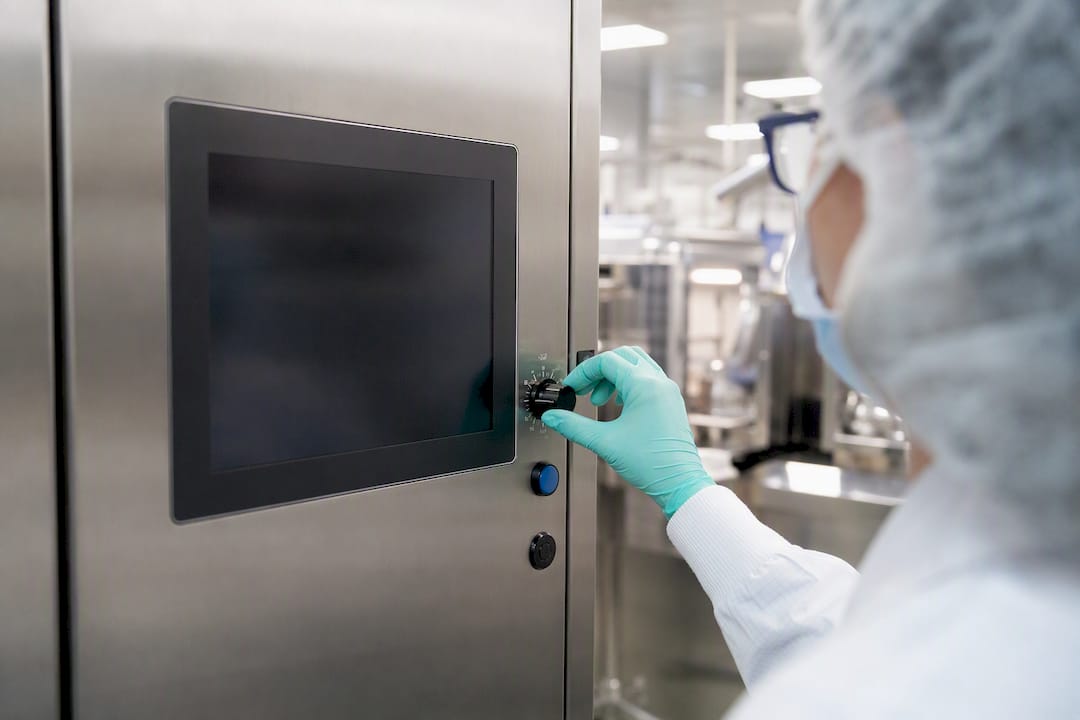
Pro Tip: Build a five-minute pre-run huddle into every OQ session. Confirm roles, confirm which script version is current, and confirm the acceptance criteria out loud. It sounds excessive until it prevents someone from running the wrong revision of a test script.
How Do You Analyze OQ Results and Handle Deviations?
Comparing results to acceptance criteria should be mechanical, not interpretive. If the protocol states a seal temperature must hold 180°C ± 2°C, a reading of 183°C is a fail, full stop, regardless of whether the team believes the extra three degrees is harmless. Basic statistical process control indicators, like plotting successive readings to check for drift rather than random scatter, can flag a slow calibration slip before it produces an outright failure.
- Compare each result against its predefined criterion; do not adjust criteria retroactively to fit the data.
- When a result fails, open a deviation record that documents what happened, the immediate cause if known, and an impact assessment on product quality and other completed tests.
- Decide whether to re-run the specific test, re-run the full protocol, or proceed with a documented mitigation, based on the deviation's root cause and its scope of impact.
- Reference the CAPA (if one is triggered) directly in the OQ summary report, so the qualification conclusion and the corrective action trail stay connected.
A deviation record that states only "temperature exceeded limit, retested and passed" without addressing why the first reading occurred is functionally incomplete. Auditors and reviewers cite exactly this gap, missing or thin impact analysis on deviations, as a recurring driver of adverse inspection findings.
The decision to proceed to PQ or hold for rework should never rest on a single person's gut read. It belongs in the summary report with the reasoning spelled out: what failed, why it's understood, what changed, and why the team is confident the retest result reflects a resolved issue rather than a masked one.
What Best Practices Reduce OQ Audit Risk?
The strongest OQ packages share a trait that has nothing to do with how many tests they ran: every test in the protocol can be traced back to a specific requirement or risk, and nobody has to guess why it's there.
- Prioritize testing based on risk to critical quality attributes, not on what's easiest to test or what a template happens to include.
- Reject generic checklists borrowed from a similar system. Every test needs a documented reason tied to the URS or FS for the specific equipment being qualified.
- Assign clear ownership for each test and each result, so six months later someone can identify exactly who executed, witnessed, and reviewed it.
- Keep the traceability matrix current as protocols evolve; a matrix that doesn't match the final test scripts is worse than no matrix at all.
Treating OQ as a checkbox exercise, running the same standard battery of tests regardless of what the equipment actually does, is the single most common pitfall, and it's the one that most reliably invites 483 observations when reviewers dig into rationale. A related risk worth flagging for teams evaluating operational exposure more broadly: operational risk in a biotech portfolio often traces back to exactly this kind of shallow, template-driven qualification work rather than any single equipment failure.
Pro Tip: When reviewing a completed OQ package, ask "why this test?" for every single line item. If the honest answer is "because the last protocol had it," that's a test that needs re-justification or removal, not a free pass.
How Do Automated Validation Platforms Strengthen OQ Evidence?
Manual OQ authoring creates the same failure modes over and over: audit trail gaps, transcription errors between paper scripts and electronic systems, and traceability matrices that fall out of sync the moment a protocol gets revised. Qualitum was built directly against those failure modes.
- Every record is checked against ALCOA+ principles at write-time and again at review-time, so gaps in attributability or contemporaneous recording get caught before they reach an auditor.
- The traceability matrix linking URS and FS requirements to OQ test cases updates automatically as protocols change, instead of drifting out of sync with a manually maintained spreadsheet.
- Authoring time drops by more than 70%, which shortens the gap between IQ completion and OQ execution, a gap where equipment often sits idle waiting on paperwork.
- Faster CSV cycles mean deviation investigations and summary reports get reviewed and closed while the context is still fresh, not weeks later.
For teams scaling OQ across multiple sites or product lines, this kind of automation is less about speed for its own sake and more about consistency: the same rigor applied to the tenth protocol as the first.
A Practitioner's Checklist for OQ Day
Most OQ failures I've seen traced back to poor sequencing, not bad science. Teams get impatient, start OQ before test method validation is truly closed, and then spend three times as long defending the data as they would have spent waiting a week.
Before execution: confirm IQ sign-off, confirm calibration certificates are current, and confirm every tester has read the current protocol revision, not a version from their inbox two weeks ago. During execution: log deviations the moment they happen, not at the end of the shift when memory has already started smoothing over the details. Afterward: write the summary report while the team that ran the tests is still available to answer questions, not after they've moved on to the next project.
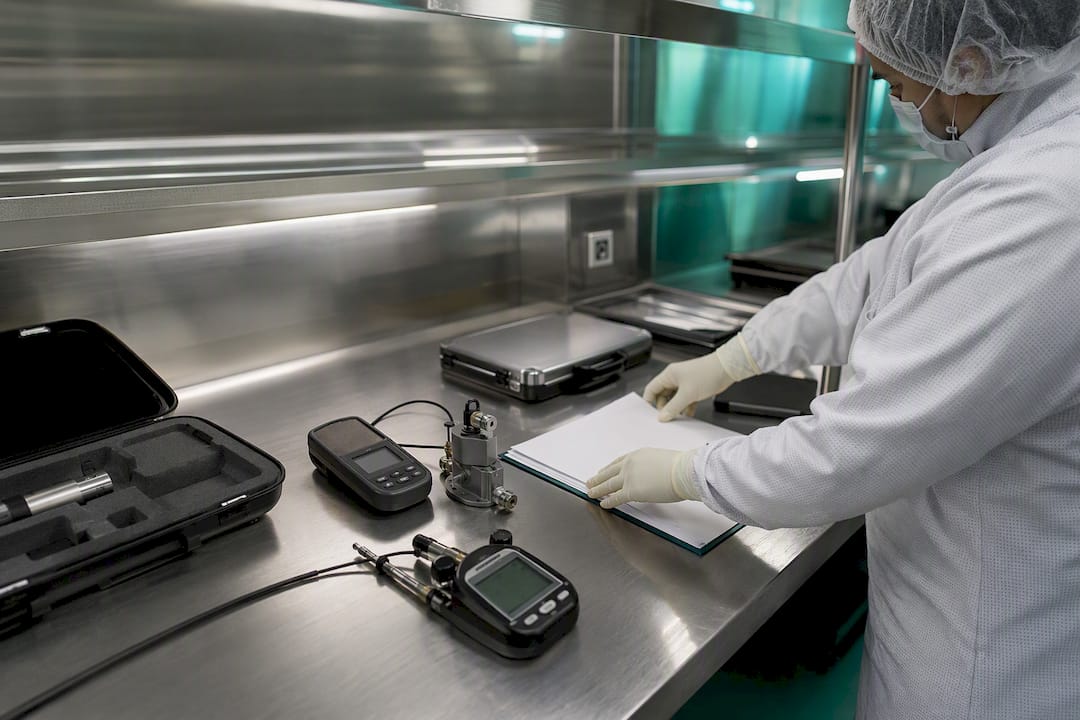
The habit that separates strong validation teams from weak ones isn't technical skill. It's whether deviation logging happens in real time or gets reconstructed later. Real time wins every time.
— Matt
Get Audit-Ready OQ Evidence Without the Manual Authoring Burden
Qualitum replaces the manual grind of protocol authoring, script writing, and traceability matrix maintenance with an agent-driven system that produces the same evidence structure auditors already expect, just faster and with fewer transcription errors.

The platform's Validate·AI module builds the traceability matrix as protocols are authored, keeping URS, FS, and OQ test cases linked automatically instead of maintained by hand across separate documents. During execution, Operate·AI enforces ALCOA+ checks at the moment data is written and again at review, closing the audit trail gaps that manual paper-to-electronic transcription tends to create. If your validation team is preparing for an OQ campaign or a broader qualification push, book a working session to see how the platform handles your specific protocol structure.
Sources
FAQ
What Is IQ, OQ, and PQ?
IQ, OQ, and PQ are the three sequential qualification stages: IQ confirms correct installation and calibration, OQ confirms the equipment or process performs within its defined operating range including worst-case conditions, and PQ confirms consistent performance under real production conditions.
What Is the Difference Between OQ and PQ?
OQ tests equipment or a process in isolation against specified operating parameters, often at worst-case extremes, while PQ tests the qualified process under actual production conditions across multiple batches to confirm real-world consistency.
What Is OQ vs IQ?
IQ verifies equipment is installed, configured, and calibrated correctly; OQ then verifies that correctly installed equipment actually operates within its specified parameters, including at the edges of its operating window.
What Is an OQ Test?
An OQ test is a specific, documented procedure that measures a critical operating parameter against a predefined acceptance criterion, typically executed under normal and worst-case conditions to demonstrate the equipment or process performs reliably across its full range.
Recommended
- Cleanroom & utility qualification · Validate·AI · Qualitum
- Operate·AI · Qualitum
- Audit Readiness Checklist for Validation and QA Leaders · Qualitum blog
- Privacy & Security · Qualitum
FAQ
What Is IQ, OQ, and PQ?
IQ, OQ, and PQ are the three sequential qualification stages: IQ confirms correct installation and calibration, OQ confirms the equipment or process performs within its defined operating range including worst-case conditions, and PQ confirms consistent performance under real production conditions.
What Is the Difference Between OQ and PQ?
OQ tests equipment or a process in isolation against specified operating parameters, often at worst-case extremes, while PQ tests the qualified process under actual production conditions across multiple batches to confirm real-world consistency.
What Is OQ vs IQ?
IQ verifies equipment is installed, configured, and calibrated correctly; OQ then verifies that correctly installed equipment actually operates within its specified parameters, including at the edges of its operating window.
What Is an OQ Test?
An OQ test is a specific, documented procedure that measures a critical operating parameter against a predefined acceptance criterion, typically executed under normal and worst-case conditions to demonstrate the equipment or process performs reliably across its full range.